Core Division Mechanic
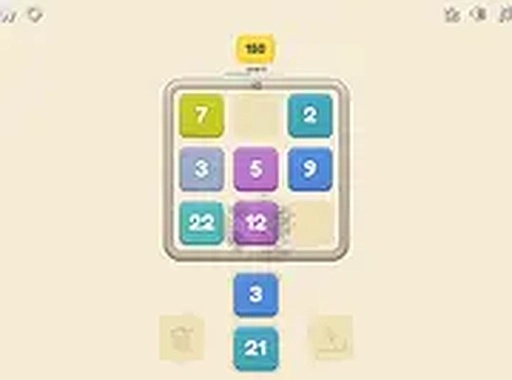
Quotient Grid presents a fresh take on number puzzles by using division as the primary interaction. Players draw numbers from a queue and place them onto empty cells of a 3x3 board. When a newly placed number sits next to an existing one, the game checks if either value divides the other without remainder. If so, the smaller number disappears and the larger becomes the quotient of the two. This simple rule creates a satisfying loop of placement, division, and clearing.
Chain Reactions and Board Management
The real depth emerges when a single placement triggers multiple divisions in sequence. Clearing one cell may open space for another division, leading to a cascade that removes several numbers at once. Because the board only has nine cells, every move matters. Players must think several steps ahead to avoid filling the grid and ending the session early. The challenge lies in balancing immediate gains with long-term board health.
Tools for Strategic Play
To help players manage the board, Quotient Grid includes a temporary holding slot. This slot stores one number for later use, allowing players to save a valuable value while they rearrange the grid. Additionally, players can discard unwanted numbers entirely. These tools give users flexibility to adapt their strategy as the board evolves. There is no time limit, so each decision can be considered carefully.
Visual Design and Accessibility
The interface is clean and uncluttered, with clear number displays and a muted color palette that reduces eye strain. The game runs directly in a web browser on desktop computers, with full-screen mode available for focused play. No downloads, sign-ups, or personal information are required. The experience is free and contains no advertisements or pop-ups during gameplay, making it suitable for all ages.
Learning Curve and Replay Value
New players can grasp the basic rules within minutes, but mastering the division chains takes practice. Each session is short, encouraging repeated attempts to improve scores and develop sharper strategies. The random number queue ensures no two games play out exactly the same, giving the puzzle strong replay value. Over time, players learn to recognize division patterns and optimize their placement order.






Comments
0 comments